(20 Reviews)

Gokyo Valley Trek via Renjo-la pass

Gokyo Valley Trek via Renjo-la pass Highlights

  • The trek heads to the ultimate Gokyo panorama from Gokyo Ri and Renjo La.
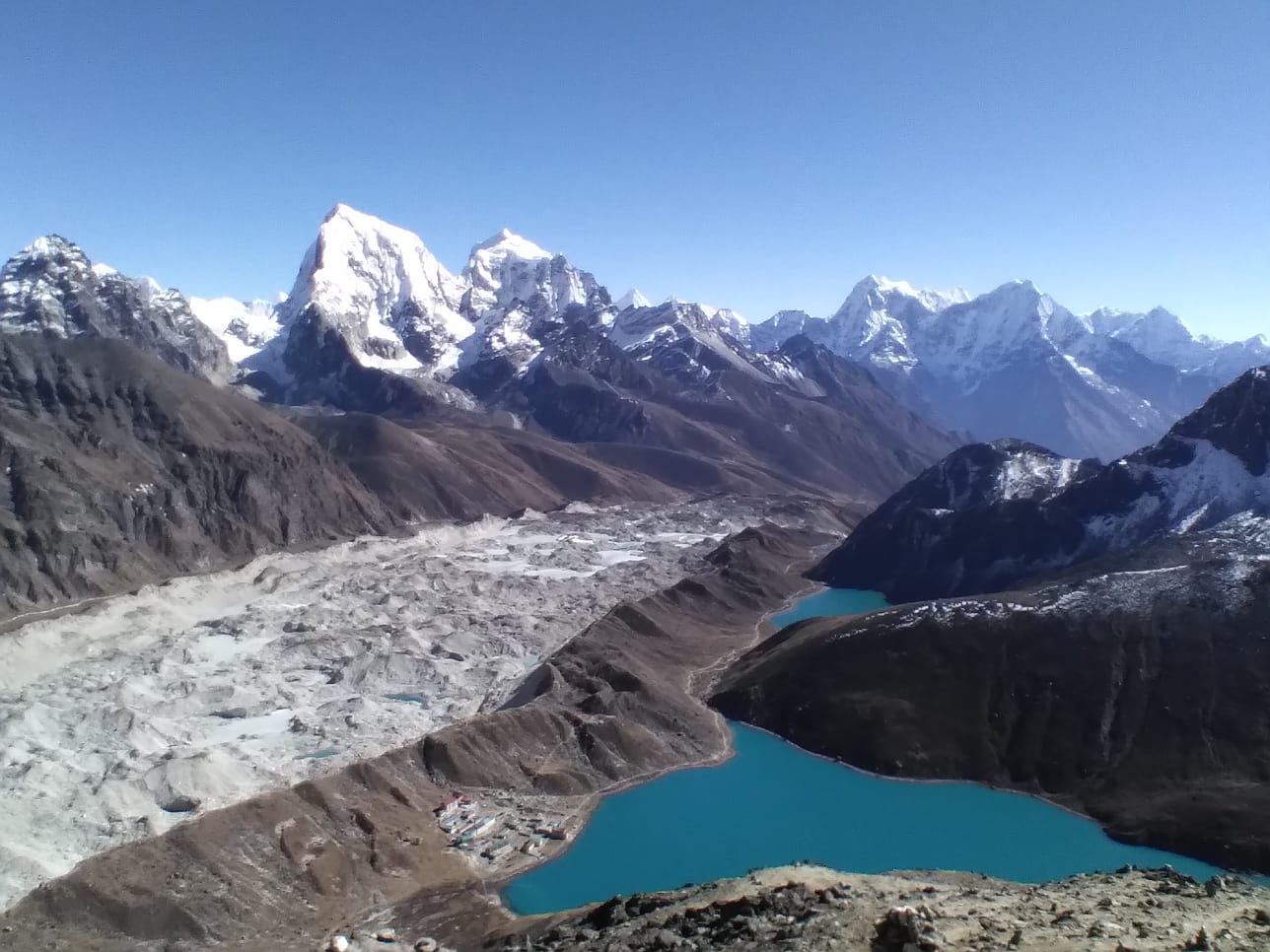
  • Here lie some sacred turquoise-colored Gokyo Lakes (UNESCO tentative list).
  • Crossing the majestic and unfriendly Renjo La Pass is in store for you. Hid away are Sherpa villages such as Thame and Lungden.
  • This is a less crowded alternative than an EBC trek.
  • Views of lovely Everest, Lhotse, Makalu, and Cho Oyu (4 8,000s!)

Gokyo Valley Trek via Renjo La Pass is among the well-renowned high-altitude journeys in Nepal that offer avenues to explore areas beyond the ubiquitous Everest Base Camp. The trek provides a perfect blend of natural beauty and cultural experiences: the mesmerizing Gokyo Lakes glisten under the towering Himalayas, traditional Sherpa settlements are found tucked away in glacier-carved valleys, and the daring Renjo La Pass (5360m) boasts one of the finest panoramas in the entire Himalayas.
The 12-14 day trek would be suitable for adventure trekkers looking to explore the quieter routes of the Everest region with magnificent views of the four highest mountains in the world: Everest (8,848m), Lhotse (8,516m), Makalu (8,463m), and Cho Oyu (8,188m).

Hop off the beaten track and embark on the much-more-remote route in the Everest massif during our Gokyo Lakes and Renjo La pass trek.
The Gokyo Lakes trek goes through Sagarmatha National Park. You will cross several exciting suspension bridges and see a majestic array of flora and fauna streaking across your way while trekking. The Rengo La Pass-Gokyo Lake trek goes through some very pretty Sherpa villages. You get to witness the lifestyle and cultural heritages of the Sherpas and those from other communities.

CULTURE & TRADITION
Sherpas inhabit this region, and their Tibetan Buddhist culture is very much intertwined with daily life. Throughout the trek, you will see prayer flags fluttering in vibrant colors, mani walls with sacred mantras etched upon them, and old monasteries overlooking villages. Places such as Namche Bazaar, Thame, and Gokyo give an insight into Sherpa culture and practices and their high-altitude way of life. Many trekkers are edified by the warmth shown by locals who still keep living traditions hundreds of years old amidst towering peaks of the world.

ACCOMMODATION

Accommodation along Gokyo is by means of locally run lodges- tea-houses. These lodges provide twin-sharing rooms with warm blankets and a common dining area for the guests. You will find nice and clean lodges in most villages starting from Phakding up to Gokyo, whereas the higher-altitude stops like Lungden and Machhermo provide only basic, yet comfortable lodging. Heading towards bigger villages of Namche and Gokyo, you may well secure a room with attached bathrooms, bakeries, and solar hot showers to further bolster your comforts.

FOOD

Meals during the trek are light and prepared freshly in tea house kitchens. You are strengthened with Dal Bhat, Tibetan bread, Sherpa stew (shyakpa), noodles, momos, porridge, fried rice, and seasonal vegetables. Warm drinks are any time available-a-must-have-milk tea, ginger lemon honey, or black coffee. In Namche and Gokyo, try to stop at local bakeries that sell apple pie, cinnamon rolls, and chocolate cakes—quite a treat at such an altitude.

PERMITS REQUIRED

The permits that one must have in order to undertake the trekal Gokyo Valley via Renjo La Pass are as follows:

  • Sagarmatha National Park Entry Permit-NPR 3,000
  • Khumbu Pasang Lhamu Rural Municipality Permit-NPR 2,000
  • The permits may be arranged in Kathmandu or at the trail entry point in Lukla.
    Note: A TIMS card for treks is not valid for this route if you have the Khumbu local permit.

Permits Required for Gokyo Valley Trek via Renjo La Pass

Permit NameIssuing AuthorityCost (NPR)Where to Get ItRequired For
Sagarmatha National Park Entry PermitNepal Department of National Parks & Wildlife3,000Kathmandu (Tourism Board) or Monjo checkpointEntry to Sagarmatha National Park
Khumbu Pasang Lhamu Rural Municipality PermitKhumbu Pasang Lhamu Rural Municipality Office2,000Lukla or Monjo Entry PointLocal entry tax for trekking in Khumbu Region
(Optional) TIMS Card (Not mandatory here)Nepal Tourism BoardN/ANot required if you have the above two permitsWas previously for trekker registration


GUIDE – Ensuring a Safe and Enriching Trek
Since Renjo La Pass is a difficult ascent, and given the remote nature of the landscapes and the risks that altitude imposes, the service of a licensed trekking guide for the Gokyo Valley Trek via Renjo La Pass should be highly recommended among trekkers. Guides do much more than just navigate-they translate, interpret culture, and manage safety.
Such guides know about acclimatization schedules, alternative routes in case weather interferes, and can spot the first signs of altitude sickness. Most guides also speak English, and they often know bits of German, Spanish, or French. They introduce you to the provenance of local traditions in places like Namche, Gokyo, or Thame, describe Buddhist iconography, and arrange for you to meet villagers and monks. From a logistical standpoint, the value that these guides add is immense, and the experience of the Khumbu they provide is truly profound.

PORTER – Trek Light, Trek Better

A porter can carry up to 20–25 kg of your load, which drastically improves your comfort and stamina, especially above 3,000 meters where oxygen is thinner and every kilogram feels heavier. Hiring a porter is also a way to support the local economy, as many porters come from nearby villages and depend on trekking seasons for income.

Ethical trekking companies ensure their porters are provided with proper clothing, shelter, food, and insurance, which is essential in such a physically demanding job. Hiring a porter not only helps you physically, but also creates a sense of camaraderie during the trek.

ALTITUDE PROFILE – Ascending into Thin Air

The Gokyo Valley Trek is a high-altitude trek, and managing elevation gain is key to a safe and enjoyable experience. Here’s a quick look at key altitudes along the route:

LocationAltitude (meters)Notes
Lukla2,840 mStarting point, flight from Kathmandu
Namche Bazaar3,440 mAcclimatization stop, Sherpa capital
Dole4,200 mTransition into alpine zone
Machhermo4,470 mHigh-altitude village, acclimatization advised
Gokyo Village4,790 mBeside the third Gokyo Lake
Gokyo Ri5,357 mSunrise viewpoint—tough but rewarding climb
Renjo La Pass5,360 mHighest point on trek; snow/ice conditions possible
Lungden4,380 mRemote village after the pass

Altitude Risk & Acclimatization
During trekking above 3,000 meters, one is susceptible to AMS. Its symptoms include headache, nausea, fatigue, and dizziness. Acclimatization days at Namche Bazaar and Gokyo must be taken. Drink plenty of fluids, abstain from alcohol, walk slowly, and take some Diamox if you believe you are in need.

Proper insurance alongside helicopter rescue coverage is strongly recommended as Renjo La is quite an isolated place and inaccessible by road.

The Best Time of Year to Trek: When the Mountains Speak Loudest

Spring: March through May
One of the best times of year to trek the Gokyo Valley is in the spring. While the weather stays consistent with long, sunny days, the trails come alive with rhododendrons in bloom. Even at higher elevations, temperatures are moderate, and there are clear, unhindered views of the mountains. This time of year is ideal for taking pictures, seeing Himalayan wildlife, and taking in the serene atmosphere of the valleys and lakes.
Temperature during the day at 4,000 meters: 10 to 15 degrees Celsius and -5°C to -10°C at night

Fall (September to November)
Because of the post-monsoon clarity, autumn is the most popular season. Unmatched mountain visibility is provided by the dry, pure air. During this time, there are also cultural celebrations like Dashain and Tihar, which give the village life a joyous feel. It is the safest and most dependable time of year for flights and passes, despite being busier than spring.
At 4,000 meters, daytime temperatures range from 8°C to 14°C.
–5°C to –12°C at night

With its combination of breathtaking mountain views, genuine Sherpa culture, sacred glacial lakes, and the excitement of traversing one of Nepal’s most stunning high passes, the Gokyo Valley Trek via Renjo La Pass provides a genuinely one-of-a-kind and heart-stirring Himalayan experience. Trekkers who take this route, which is far less crowded than the Everest Base Camp route, are rewarded with serene trails, unspoiled nature, and some of the world’s best alpine scenery. Every stage of this trek combines adventure, spirituality, and natural wonder, from the Gokyo Lakes’ glistening turquoise waters to the breathtaking climb over Renjo La.
The trek is accessible to fit and conscientious hikers looking for something out of the ordinary thanks to established tea house infrastructure, the assistance of knowledgeable guides and porters, and adequate acclimatisation. Regardless of your interests—mountains, culture, or spirituality—this trek offers an experience that will stay with you long after your boots are back at home. A journey through the heart of the Himalayas, the Gokyo Valley Trek via Renjo La Pass is more than just a trail.
Gokyo Valley Trek via Renjo-la pass Itinerary

If you're looking for a tailor-made trip or want to customize this itinerary, feel free to reach out to us. We're here to help you create the perfect holiday plan. Contact us anytime!

Day 1

Fly to Lukla & Trek to Phakding (2610m) 4-5 hrs walk.

Duration 4-5 hrs
A stunning morning flight from Kathmandu to Lukla, an airport that is carved out of the hillside and is regarded as one of the most beautiful and exciting landing sites in the world, marks the start of your Himalayan adventure. You will start your walk with a mild descent through pine forests, stone villages and fluttering prayer flags after meeting your trekking crew in Lukla. You pass tiny villages and cross your first suspension bridge as you follow the milky Dudh Koshi River until you arrive at the quiet village of Phakding. Perfect for your first night in the Khumbu, Phakding is a riverside town with comfortable tea houses, river sounds, and clean mountain air.
Day 2

Trek to Namche Bazaar (3,445m) – 5 to 6 hours

Duration 5-6 hrs
Following breakfast, the trail continues along the riverbank and progressively climbs through pine and rhododendron forests. At Monjo, you'll cross a number of striking suspension bridges, such as the well-known Hillary Bridge, and enter Sagarmatha National Park. The final two-hour climb to Namche Bazaar is rewarding despite being steep and difficult. You will first see Everest peeking over the ridgelines as you get closer to Namche. The vibrant amphitheater-shaped town of Namche Bazaar, the centre of the Sherpa region, is teeming with bakeries, gear stores, cafés, and cultural attractions.
Day 3

Acclimatization Day in Namche – Hike to Everest View Hotel (3,880m)

Duration 5-6 hrs
You will stay an additional night in Namche while touring the nearby highlands to help with acclimatisation. A well-liked and picturesque trek leads to the Everest View Hotel, where, on a clear day, you can sip warm tea while taking in expansive views of Everest, Lhotse, Ama Dablam, and Thamserku. Another option is to go to Khumjung village, where Sir Edmund Hillary established one of the area's first schools. You can spend the day learning about Sherpa culture and allowing your body to acclimatise to the higher elevation.
Day 4

Trek to Dole (4,150m) – 5 to 6 hours

Duration 5-6 hrs
You climb away from the EBC trail and head for the more sedate Gokyo Valley. After leaving Namche, the trail climbs sharply through rhododendron-covered slopes and sporadic yak grazing fields. The trees give way to alpine meadows and dwarf shrubs as you ascend. After passing Mong La, you'll make a quick descent before climbing once more to Dole, a tiny community tucked away on the mountainside with simple but comfortable lodges and expansive views of the valleys below.
Day 5

Trek to Machhermo (4,470m) – 5 to 6 hours

Distance 5-6 hrs
The trail today offers a nice blend of expansive views and a slow ascent. You'll pass tiny Sherpa communities like Lhabarma and Luza as you stroll past summer yak pastures. With views of Cho Oyu (8,188m) and nearby peaks in the distance, the route climbs steadily alongside the Dudh Koshi River. Set beneath a ridge, Machhermo is a breathtaking high-altitude village that offers breathtaking sunrise and sunset views. Another well-known (and hotly contested) yeti sighting occurred there in 1974.
Day 6

Trek to Gokyo Valley (4,750m), Afternoon Explore Gokyo Lake – 5 hours

Duration 5 hrs
The trail gently climbs alongside glacial outflows and moraine from Machhermo. You soon arrive at the first of the revered Gokyo Lakes, which glisten in an unreal combination of green and blue. You will reach the village of Gokyo on the shores of the third and largest lake, Dudh Pokhari, after passing the second one. Glaciers, sky-reflecting waters, and towering peaks encircle Gokyo. Explore the lakeshores, stop by neighbouring viewpoints, or just relax with yak cheese soup and the quiet of the mountains after lunch.
Day 7

Early Morning Hike to Gokyo Ri (5,360m) – Sunrise Summit

Duration 5hrs
One of the most satisfying parts of the whole journey is this. You will ascend to Gokyo Ri before dawn, which is a steep but doable climb to one of Nepal's best panoramic views. You can see Everest, Lhotse, Makalu, and Cho Oyu in one amazing sweep as the Himalayas are bathed in golden light during a surreal sunrise from the summit. The vast Ngozumpa Glacier and the Gokyo Lakes lie motionless and quiet below. After taking in the scenery, head back to Gokyo for a leisurely day and a late breakfast.
Day 8

Trek to Lungden (4,380m) via Renjo La Pass (5,360m) – 10 hours

Duration 10 hrs
The trek's most physically taxing and spectacular day is today. Starting early, you will ascend switchbacks in the direction of Renjo La Pass, which, depending on the season, may be covered in snow. A breathtaking view of the Gokyo Lakes below and the majestic Himalayan range beyond awaits you when you reach the summit. The long and steep descent leads to the isolated village of Lungden, which is tucked away in the Bhote Koshi Valley. It passes through frozen streams and high yak pastures.
Day 9

Trek to Thame (3,850m) & Visit Thame Monastery – 4 to 5 hours

Duration 5-5 hrs
After leaving Lungden, you'll travel along a historic trade route that was once frequented by Tibetan traders. With its rocky ridgelines, traditional stone walls, and grazing yaks, the trail is serene. You will visit the revered Thame Monastery, a serene, spiritual location perched above the village with centuries of history and breathtaking artwork, when you arrive in Thame, one of the oldest and most culturally rich Sherpa villages in the area. Renowned climber Tenzing Norgay was born in Thame as well.
Day 10

Trek to Namche Bazaar (3,440m) – 5 to 6 hours

Duration 5-6 hrs
As you descend towards Namche Bazaar, you will retrace your steps through glacial streams and alpine forest. Along the way, savour the return to somewhat lower elevations and take in the now-familiar peaks from a fresh perspective. After arriving in Namche, recharge your electronics, take a hot shower, and perhaps grab a final piece of mountain apple pie from a café.
Day 11

Trek to Lukla (2,840m) – 7 hours

Duration 7 hrs
Your last day of trekking is today. On your way back to Lukla, you'll cross suspension bridges, follow the Dudh Koshi River, and pass stones carved with prayers. Although the trail is primarily downhill, there are a few last ascents. Together with your guide and porters, you will celebrate your arrival in Lukla while thinking back on the difficulties and breathtaking views of your journey.
Day 12

Fly Back to Kathmandu

Weather permitting, you'll catch an early morning flight back to Kathmandu. The sudden shift from remote trails to the vibrant chaos of the capital feels surreal. You’ll carry home not just stunning photos, but a lifetime of memories carved by ice, prayer flags, and Himalayan air.

Gokyo Valley Trek via Renjo-la pass Inclusions

What's included

Tree Times Three meals a day- breakfast, Lunch, Dinner and 3 cups of tea/Coffee a day during the trek.
Accommodation in a tea house during the trek, private room.
Nepal Holiday Treks and Tours, (-20 degree sleeping bag) and a duffel bag for the trekking, but you need to refund to the office after the trip.
Domestic flight ticket from Kathmandu to Lukla and Lukla to Kathmandu or Ramechhap to Lukla and Lukla to Ramechhap, including airport taxes.
Your hotel to Kathmandu airport to hotel private jeep & from Kathmandu to Ramechhapairport to Kathmandu sharing jeep.
An experienced, helpful, knowledgeable, friendly, English speaking, well trained, government license holder Trekking Guide with all his salary, food, Drinks, accommodation, equipment, transport, insurance, etc.
In a day time tea break with cookies every day.
Fresh fruits after dinner every night as dessert during the trek.
You will be under observation with a pulse oximeter to have your oxygen levels and heart rate measured twice a day during the trek. This is to catch the signs of Altitude Mountain Sickness (AMS) early, thus making trekking safer.
Includes the Sagarmatha National Park entry permit, TIMS card, and Khumbu PasangLhamu Municipality access permit.
Normal First aid kit box.
Nepal Holiday Treks and Tours trip completion certificate from the company side.
Normal drinking water during the trek.
Arrangement of Emergency helicopter service (paid by your travel insurance company).
All taxes and company service charges.

Add-ons

    What's not included

    International airfare and visa fees.
    Lunch and dinner in Kathmandu.
    Any accommodation and airport pickup and drop in Kathmandu.
    Personal expenses of bar and beverage bills, Wi-Fi, hot shower, bottle of water, extra porters, laundry, or any other things that are not mentioned by the company.
    Your trekking gear and extra nights in a certain destination.
    A strong, helpful porter with proper safety equipment and walking equipment, his salary, food, drinks, accommodation, and insurance (one porter for two people, he will carry a bag pack max 20-25 kg).
    Your travel insurance, which should include the emergency rescue.
    Tips for your guide and porters, which is compulsory.
    Extra expenses due to any event such as strikes, weather conditions, or flight delays.
    Mr Ramesh - Tour Operator in Nepal Holiday

    Ramesh Bajgain

    Kristen - representative in Australia for Nepal Holiday Treks

    Kristen

    Mr Ramesh - Tour Operator in Nepal Holiday

    Ramesh Bajgain

    Plan your trip with local expert

    Feel free to inquire, and together, we'll design the perfect journey to suit your preferences and desires.

    Plan Your Trip